Select your language
 ID
ID 


Program Activities
Joint Movement of Churches, Government, and Communities through the Local Food Festival and Campaign
YSI
Hits: 86
3 minutes read
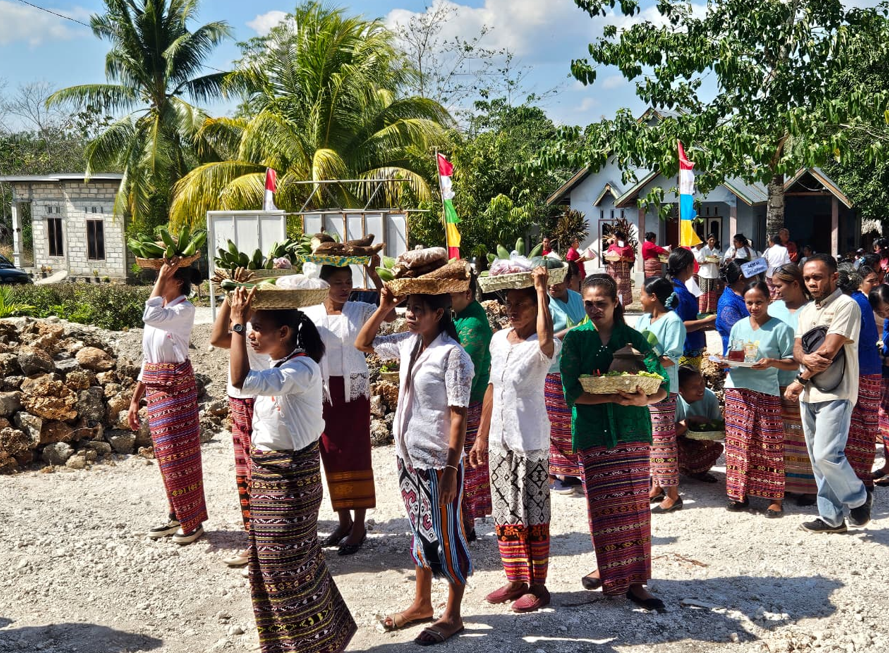
As part of the implementation of the Sustainable Local Food System Program initiated by Yayasan SHEEP Indonesia (YSI) in the Kupang Region, a Local Food Festival and Campaign was held at Efrata Karisin Church, Amabi Oefeto Subdistrict, Kupang Regency.
Efrata Karisin Church was chosen as the venue because of its wide congregation network that reaches many surrounding communities. The church holds a strategic position as a center for education and moral action, making it an effective platform for promoting the importance of consuming and producing local food.
The Independent and Sustainable Local Food System Program aims to:
- Revitalize local food resources that have gradually been marginalized by food modernization.
- Promote local food as a source of healthy nutrition while increasing economic value for farmers and micro-enterprises.
- Strengthen climate-adaptive food security through the use of local varieties that are more resilient to extreme conditions.
- Develop a sustainable food system from production to consumption for the benefit of future generations.
Through the collaboration of YSI as the facilitating organization, Efrata Karisin Church as the faith institution, and local communities, the campaign is expected to become a collective movement that transforms consumption patterns, encourages local food production, and strengthens environmentally sustainable local economies.
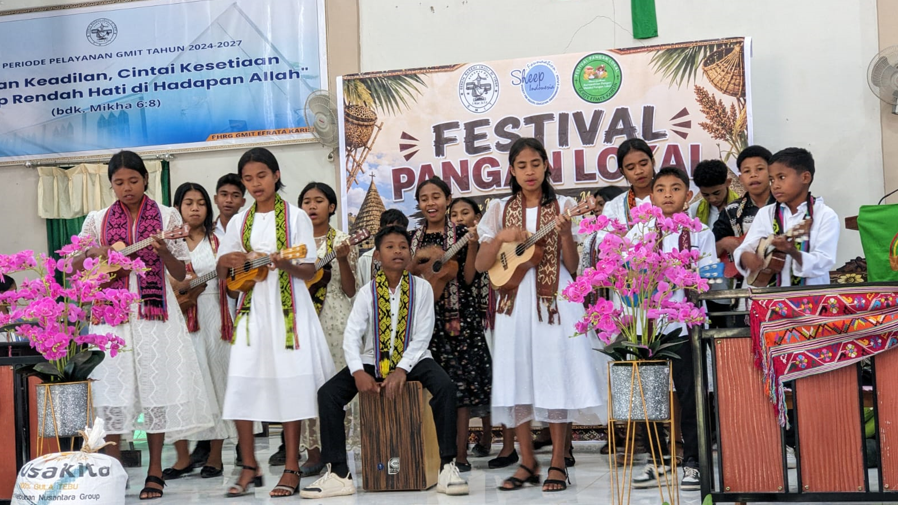
The event was attended by approximately 200 participants, including church congregation representatives, women’s groups, farmer groups, village and subdistrict governments, the Kupang Regency Government, community health centers (Puskesmas), agricultural extension officers (PPL), the GMIT Synod, and the East Kupang Classis Assembly.
The festival began with a Local Food Parade showcasing the diversity of local agricultural products and traditional foods such as local maize, root crops, legumes, and local livestock. The parade served as a public education activity and was enlivened by NGO partners and a local Ukulele music group performing songs on environmental and food themes in the local language.
The program continued with a Thanksgiving Worship Service, a seed blessing ceremony symbolizing hope for the upcoming planting season, and expressions of gratitude for the harvest that had been received. The festival also featured a local food cooking competition, knowledge-sharing sessions on healthy food processing, and discussions on household-based food business opportunities. Women’s groups from the congregation displayed processed food products that have become additional sources of family income.
Throughout the festival, several joint commitments were established, including:
- Penguatan edukasi pangan lokal di lingkungan jemaat,
- Pengembangan kebun pangan lokal keluarga di jemaat dampingan,
- Pendampingan teknis dari pemerintah daerah, serta
- Pelatihan pengolahan dan pemasaran pangan lokal bagi masyarakat dan jemaat.
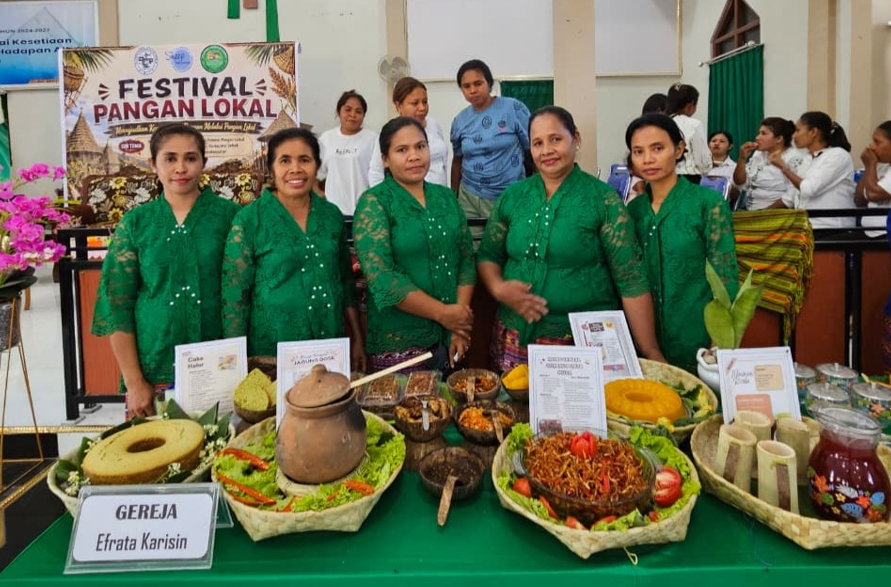
The festival became a strategic momentum to revive local food as a source of healthy living, economic opportunity, climate resilience, and long-term sustainability.
A representative of the East Kupang Classis stated: “We are committed to realizing local food self-reliance as an expression of love for one another and our responsibility to care for God’s creation.” This statement highlights the important role of the church in promoting local food potential and supporting community food self-reliance.