Select your language
 ID
ID 


Program Activities
Learning Self-Awareness, Organizing, and Raising Voices: Climate Justice Warrior Capacity Building
YSI
Hits: 83
4 minutes read
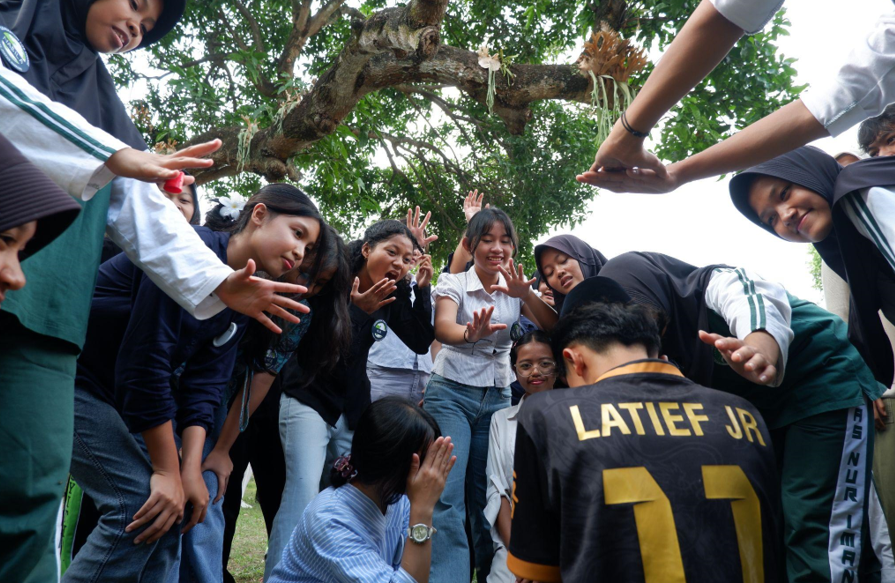
LPP Sinode Yogyakarta became a learning space for members of the Climate Justice Warrior (CJW) from partner schools of the Climate Justice for Children’s Protection Rights Program (KIPHA) of Yayasan SHEEP Indonesia on 28–29 July 2026. The Capacity Building program was conducted separately for two educational levels: junior secondary schools (SMP/MTs) on 28 July 2026 and senior secondary schools (SMA/MA) on 29 July 2026, facilitated by Wahyu Wibisono and Ficky Tri Sanjaya.
The program was attended by CJW members from KIPHA partner schools in Yogyakarta City and Sleman. The participants were student representatives who are being prepared to engage in climate justice campaigns and advocacy, both within their schools and in forums involving various stakeholders beyond the school environment.
This activity is part of KIPHA’s strategy to strengthen climate change literacy, raise environmental awareness, and enhance meaningful child participation in climate justice advocacy for the protection of children’s rights in Yogyakarta. The training served as a follow-up stage after a series of workshops on climate change, climate justice, children’s rights, and advocacy capacity strengthening that had previously been conducted. It also functions as preparation for future conservation actions and climate justice advocacy directed toward stakeholders at the city/regency, provincial, national, and even global levels.
The program was developed from the understanding that the climate crisis affects not only the environment but also threatens children’s rights to a healthy, safe, and supportive environment for optimal development. The UN Committee on the Rights of the Child, through General Comment No. 26, affirms that children have the right to be heard and to participate meaningfully in environmental decision-making processes. However, the right to be heard does not automatically materialize without the skills, knowledge, and confidence to express one’s views. Therefore, this Capacity Building initiative was designed as a learning space where children could understand climate issues, organize themselves, and voice their ideas responsibly.
The activity began with a self-awareness session. Participants drew self-portraits, identified their strengths and potentials, and shared them with their discussion partners. At the junior secondary level, the session concluded with participants singing the song Aku Istimewa (“I Am Special”) together. At the senior secondary level, participants attached notes describing their abilities and potentials next to their photos displayed on the hall wall. This session became an important first step in building self-confidence and awareness that every child has the capacity to participate and speak out on environmental and children’s rights issues.
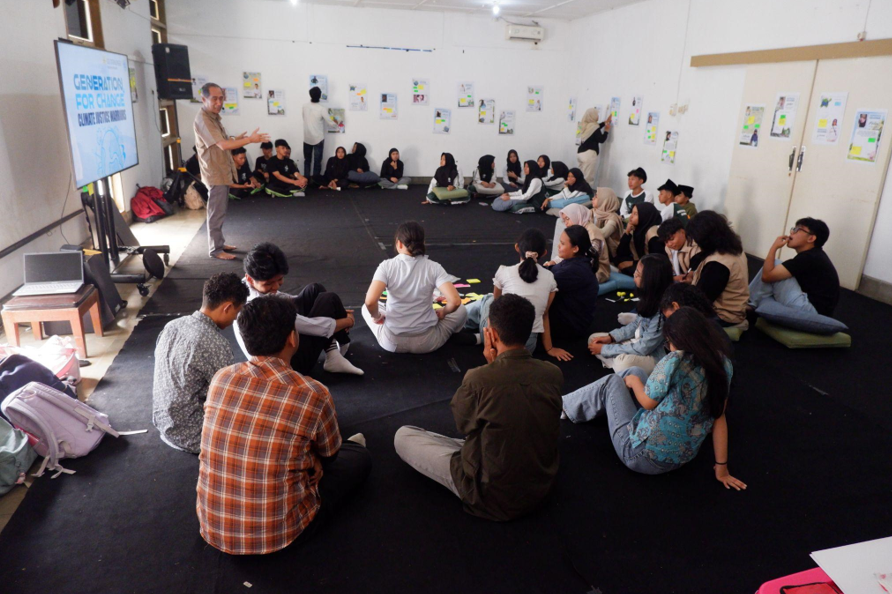
In the next session, Wahyu Wibisono introduced the participants to the fundamentals of organizing. The session explored the meaning of organization, the importance of shared goals, equal distribution of roles, openness, solidarity, and critical thinking in children’s organizations. Participants then worked in groups to design environmental campaigns or actions and presented their ideas to the other participants. One proposal, for example, was the organization of a CJW Camp featuring environmental clean-up and conservation activities involving local communities. Through this process, participants learned how to develop ideas, divide responsibilities, make collective decisions, and take responsibility for the plans they created.
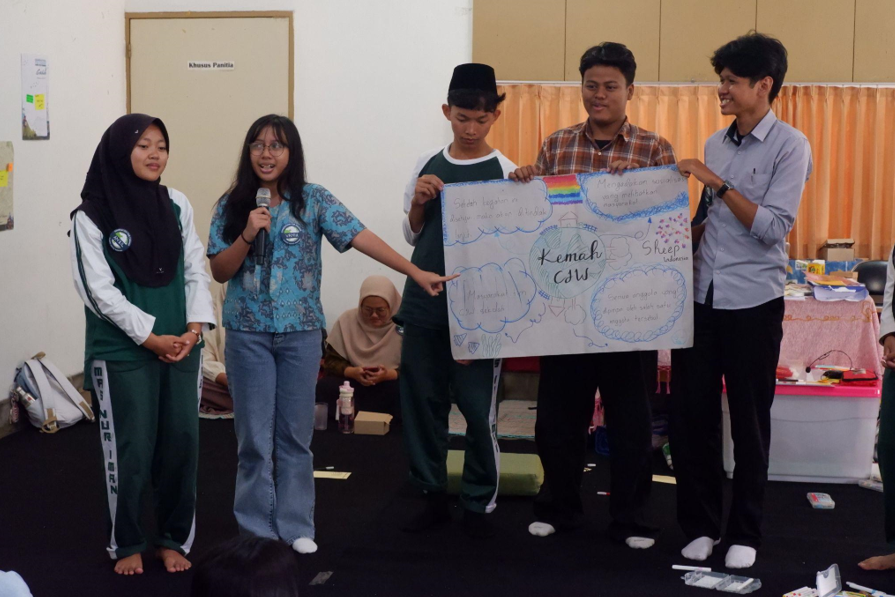
In the afternoon, Ficky Tri Sanjaya invited participants outdoors to practice concentration, observation skills, and the confidence to express themselves. Through moving meditation, imagination games, and group performances delivered through pantomime and verbal expression, participants learned that advocacy messages can be communicated through the body, facial expressions, movement, writing, and performance, not only through speeches or presentations.
Participant reflection became an important part of this capacity-building process. Kika, a participant from SMA Bumi Cendekia, questioned at the end of the program how the organizational and public speaking capacity-building sessions were connected to the work CJW had been doing so far. The facilitators explained that advocacy requires diverse approaches, not only demonstrations and formal hearings that are often perceived as “hard” forms of advocacy, but also drama, poetry, and other artistic expressions. Such soft advocacy approaches are increasingly relevant in a context where governments may become more repressive toward critical voices, because they create opportunities for dialogue without reducing the strength of the message being conveyed.
As a follow-up, CJW groups in each school will establish organizational structures and develop six-month activity plans together with their mentors. This process aims to strengthen collective CJW work at the school level, expand the involvement of other students in climate justice issues, and build a foundation of experience and evidence that will support future advocacy efforts with stakeholders.