Select your language
 ID
ID 


Program Activities
Climate Justice Integration for Children's Rights Through Engaging Teaching Methods
YSI
Hits: 100
3 minutes read
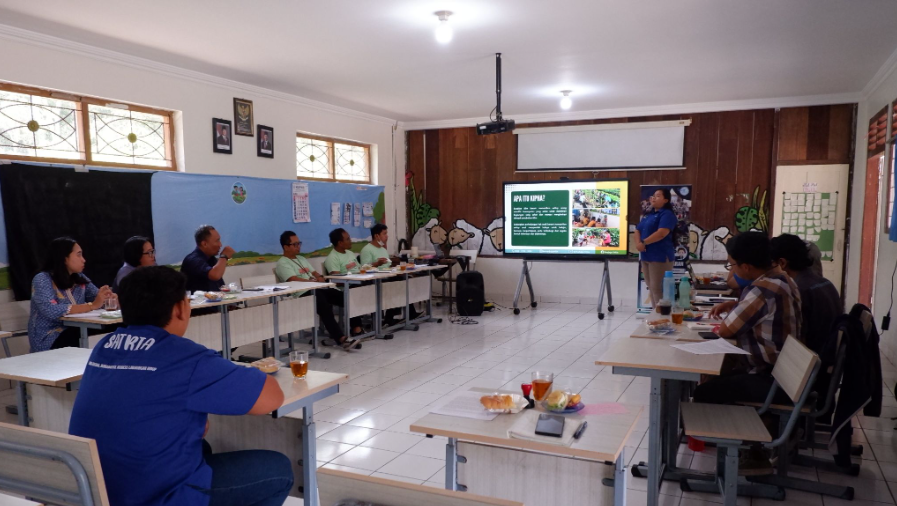
SLEMAN, at Bumi Cendekia. Following the first day's refresher sessions to strengthen participants' understanding, 32 teachers from 12 partner schools began identifying their existing experiences and practices to create more meaningful changes in the program's third year. On 21 to 22 July 2026, they gathered for separate Classroom Sessions held at SD Sanjaya Tritis for elementary school teachers and at the Bumi Cendekia Islamic Boarding School for junior and senior secondary teachers. The sessions served as the foundation for developing climate justice based learning modules tailored to each school's context.
Dividing the sessions by education level was considered essential to ensure that climate justice concepts, teaching approaches, and learning methods were appropriate for the students' developmental stages and learning capacities.
Learning Process and Classroom Practice
- Elementary School Session SD Sanjaya Tritis, Tuesday, 21 July 2026
At the elementary level, the primary focus was on nurturing empathy and environmental awareness from an early age. Early childhood is a critical stage for developing curiosity, shaping children's memories, and encouraging them to observe and understand the environment around them.
Bernadetta Rini Susanti, S.Pd., M.M., and Yustina Gina Aprinta Utami, S.Pd., shared SD Sanjaya Tritis' experiences and challenges in integrating the KIPHA initiative into students' daily learning activities. Their presentation highlighted local environmental, ecological, and economic issues that became entry points for introducing climate justice concepts and embedding them into the school curriculum.
Teachers also participated in an environmental observation walk around the school grounds, using the surrounding environment as a living classroom. By observing real situations through the perspectives of both children and teachers, participants explored ways to transform everyday experiences into meaningful learning opportunities that help children remember, understand, and discover solutions independently.
During group discussions, teachers designed learning activities that would introduce climate justice in enjoyable, age appropriate, and non-intimidating ways.
To strengthen collaboration beyond the workshop, participants established a teacher learning forum called Green Action Sabumi. The forum consists of four elementary schools: SD LHI Juara, SD BOPKRI Sidomulyo, SD BOPKRI Gondolayu, and SD Sanjaya Tritis. It will serve as a platform for teachers to exchange ideas, discuss challenges, and develop more creative learning approaches together.
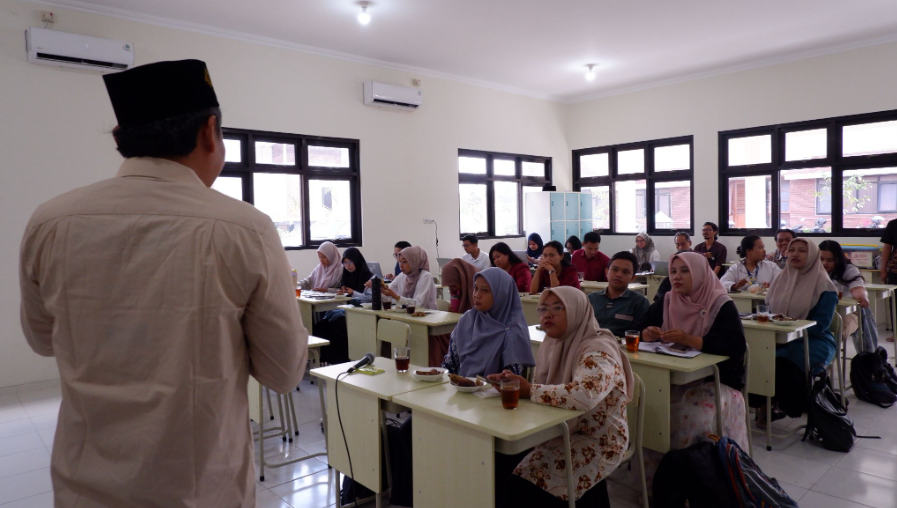
- Junior and Senior Secondary Session Bumi Cendekia Islamic Boarding School, Wednesday, 22 July 2026
For the secondary level, the learning approach emphasized critical thinking and interdisciplinary collaboration.
Taufik Ariyanto, Principal of SMA Bumi Cendekia, and Wisnu Pratomo, Principal of SMP Bumi Cendekia, facilitated curriculum development using the STEAMS approach, integrating Science, Technology, Engineering, Arts, Mathematics, and Social studies.
Twenty teachers from eight schools worked together to design learning modules that challenge students to analyze the social impacts of the climate crisis while developing practical and technology based solutions. Participants also explored a variety of interactive and creative teaching methods that integrate climate justice issues across multiple STEAMS disciplines, making learning more relevant, engaging, and action oriented.
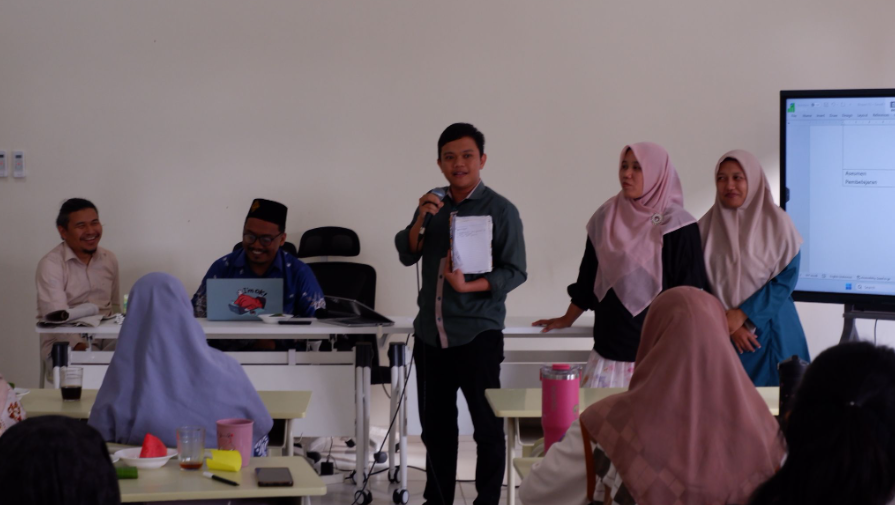
Discussion and Planning for Curriculum Development
At the end of the sessions, participants produced several tangible outcomes that will guide the next phase of the program.
Curriculum Integration Framework. Each partner school developed initial ideas and documented practical approaches for integrating KIPHA and climate justice themes into their curriculum and teaching modules.
Follow Up Action Plan. Each school prepared a follow up action plan that will serve as the foundation for the next activities, including study visits and workshops to finalize climate justice teaching materials.
These achievements reaffirm the commitment of partner schools to go beyond delivering academic knowledge. They are taking concrete steps to equip children with the knowledge, values, and skills needed to understand climate justice and build resilience against the growing impacts of the climate crisis.