Select your language
 ID
ID 


Program Activities
Strengthening Awig-Awig and Establishing a Local Institution for Spring Protection in the Santong Landscape
YSI
Hits: 91
4 minutes read
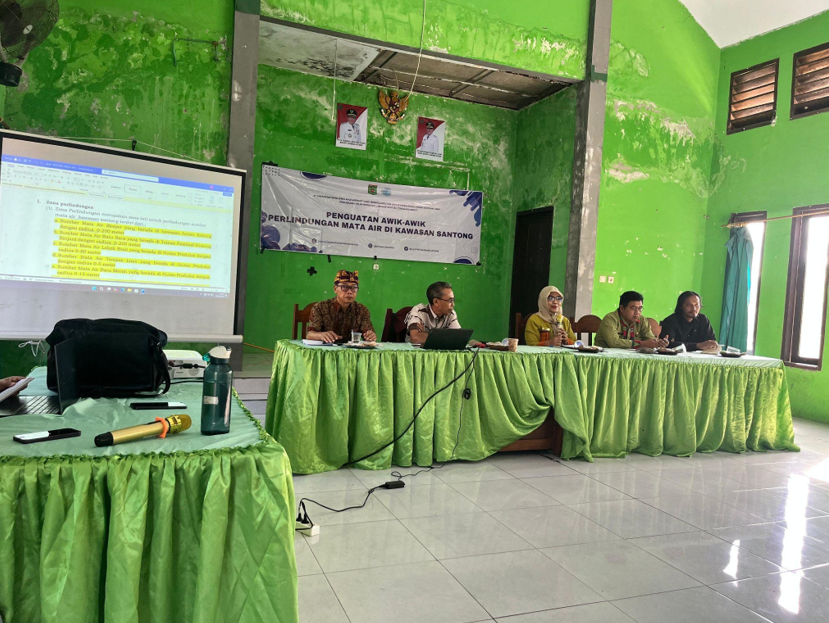
Yayasan SHEEP Indonesia (YSI), together with Perkumpulan Yaksa Lumbung Kemanusiaan Masyarakat Pedesaan (YLKMP) North Lombok, facilitated the strengthening of the Awig-Awig for the Protection and Management of Spring Areas and the establishment of the Santong Spring Protection Institution in Kayangan District, North Lombok Regency, West Nusa Tenggara. The agreement was signed on 6 August 2026 at the Kayangan District Head Office.
The agreement was developed through a lengthy process, beginning with multi-stakeholder dialogue and continuing with efforts to strengthen landscape governance. The process involved village governments, water management groups, Community-Based Organizations (OMB), and other relevant stakeholders.
The Santong area has six springs that provide water for communities across seven villages, with an estimated 5,442 people benefiting from these water sources. In recent years, communities have faced several challenges, including forest degradation, declining water flow during the dry season, and limited cross-sectoral coordination in managing the spring areas. Protecting the springs has therefore become an urgent need.
Kayangan District Head Siti Rukayah said that the agreement was the result of a participatory process that took place over nearly two months. During this period, various stakeholders came together to discuss and develop a shared understanding of spring protection as an important asset for community livelihoods and the sustainability of the landscape.
The meeting was attended by representatives from the North Lombok Environmental Agency, the Kayangan District Government, village governments across the Santong area, PAMDes, KP-SPAMS, Pokmair, P3A, Forest Farmer Groups (KTH), KPH Rinjani Region I Santong-Sidutan Resort, Kayangan Police Sector, Kayangan Military District Command, and community leaders.
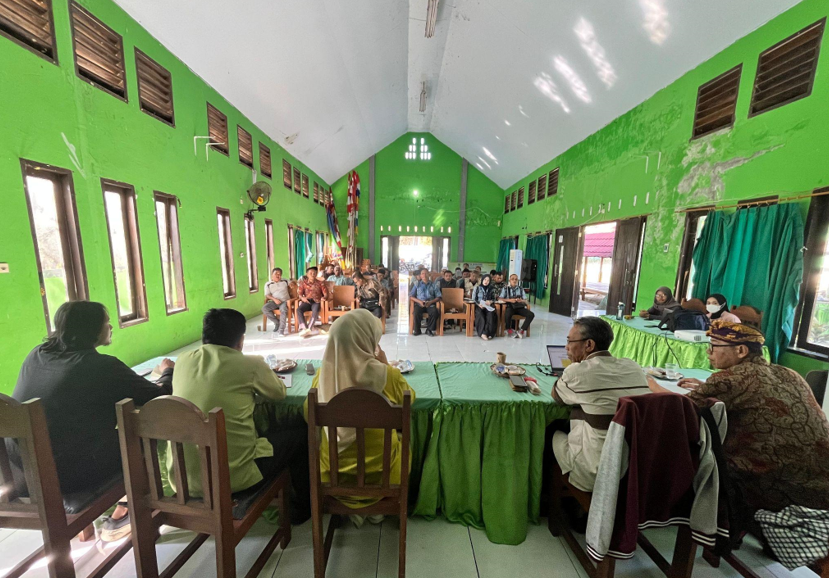
The Secretary of the North Lombok Environmental Agency, Masrik, S.Pd., said that strengthening the Awig-Awig is a strategic step toward strengthening community-based environmental protection and clarifying the roles of different stakeholders in water resource management.
YSI explained that the series of activities began in June 2026. The process included reviewing the existing Awig-Awig, holding discussions with water user groups, conducting field surveys to determine core protection and utilization zones, and establishing an institution to manage the springs.
The strengthening of the Awig-Awig resulted in several important agreements, including:
- Establishing core spring protection zones with agreed-upon radii of 0–5 meters, 0–15 meters, and, in some areas, up to 0–200 meters,
- Establishing utilization zones based on the boundaries of the core protection zones, with a maximum radius of 200 meters.
- Establishing regulations for water management systems, including pipe sizes and water meters, as well as environmental services to support spring protection.
- Prohibiting certain activities within core protection zones, including the installation of water pipelines and irrigation infrastructure.
- Establishing sanctions for violations involving spring areas, pipeline networks, and irrigation systems.
- Establishing mechanisms for implementing and enforcing the Awig-Awig, including the formation of a local management institution.
The Santong Spring Protection Institution was established with a management structure consisting of 28 representatives from 21 groups, villages, and law enforcement institutions. The institution has four main responsibilities:
- Coordinating all stakeholders involved in spring management.
- Monitoring the implementation of the Awig-Awig.
- Facilitating the resolution of issues related to water use.
- Developing a management work plan for the landscape.
During its first year, the institution plans to install signs marking the core protection zones around the springs. This will help clearly identify and communicate the agreed zoning boundaries.
Through this process, communities have strengthened existing customary regulations while also establishing a more organized institutional mechanism to protect the sustainability of the springs. This local institution is expected to serve as a platform for coordination, decision-making, and joint monitoring of the landscape.
A community representative and Head of the Kayangan Branch of PDAM said, “The development of the Awig-Awig provides a clear direction for managing the landscape and its springs. Previously, each institution had its own objectives, but the Awig-Awig has become a bridge that brings together different interests related to water.”
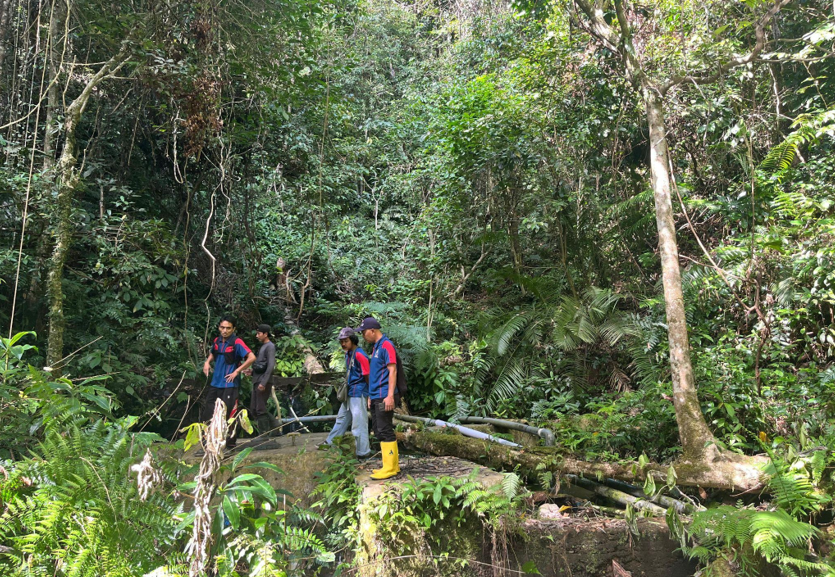
The strengthening of the Awig-Awig and the establishment of the Santong Spring Protection Institution are important components of a landscape-based management strategy that positions communities as key actors in environmental protection. Through this agreement, the spring protection areas within the Santong forest landscape are expected to be sustainably maintained and continue to support water availability for communities across seven villages.
YSI considers the strengthening of the Awig-Awig and the establishment of the spring protection institution as an initial step toward building sustainable, landscape-based governance. This process is expected to serve as a model for inter-village collaboration in protecting water resources, strengthening local institutional capacity, and reducing community vulnerability to drought and the impacts of climate change.