Select your language
 ID
ID 


Program Activities
Innovation Starts with People: Yayasan SHEEP Indonesia Strengthens Peer Humanitarian Partners Through Innovation Training
YSI
Hits: 103
4 minutes read
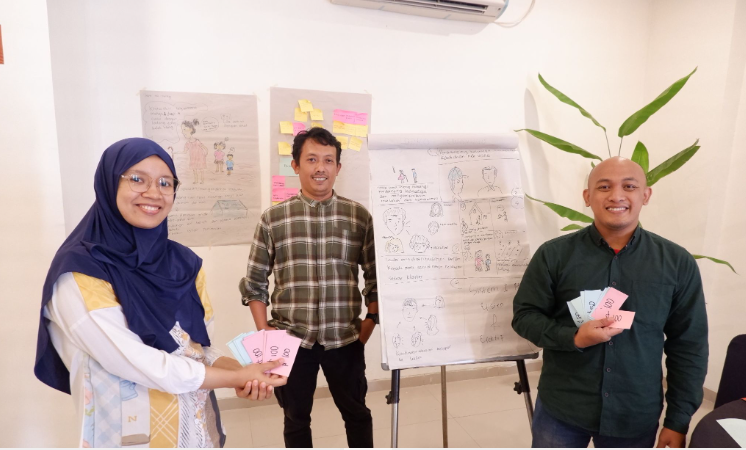
YOGYAKARTA. Through the ToGETHER Programme, Yayasan SHEEP Indonesia (YSI) organized an Innovation Training for Peer Humanitarian Partners (PHP) on 29 and 30 June 2026 in Yogyakarta. The two day capacity strengthening programme brought together representatives from five Peer Humanitarian Partner organizations: YAPHI, Mitra Wacana, Jaga Balai, CAPPA, and GKJW.
The training aimed to strengthen participants' capacity to develop innovation in humanitarian action by applying Human Centered Design (HCD) and fostering an innovation mindset within their respective organizations. The activity forms part of the jointly agreed 2026 work plan under the ToGETHER Programme.
As humanitarian challenges become increasingly complex due to climate change, disasters, and evolving community needs, the training encouraged participants to view innovation as a process rooted in understanding people rather than simply adopting new technology. Through participatory learning methods, participants explored how innovation can emerge through improved ways of working, stronger collaboration, and better use of local knowledge.
Building a New Perspective on Innovation
The first day began with introductory activities designed to build trust and create a collaborative learning environment. Participants jointly established learning agreements, shared their expectations, and discussed concerns about the training.
During the Innovation session, facilitators guided participants in identifying challenges commonly encountered in humanitarian work. Discussions revealed that many programmes remain organization centered rather than community centered. Participants highlighted limited participatory assessments, insufficient coordination with vulnerable groups, institutional silos, and donor driven approaches as key obstacles.
The Introduction to Innovation session invited participants to share innovative practices already implemented within their organizations. Examples included the use of artificial intelligence for organizational communication, KoboCollect for field data collection, innovative learning media developed by faith based organizations, and storytelling approaches to promote local products.
These discussions reinforced the understanding that innovation does not necessarily mean creating something entirely new. Instead, innovation means developing solutions that are more effective, efficient, and relevant to people's needs.
During the Human Centered Design session, participants reflected on why humanitarian responses often fail to fully address community priorities. The discussion showed that programme planning frequently overlooks meaningful community participation in decision making. This became the entry point for introducing Human Centered Design as a framework for designing more responsive humanitarian programmes.
The first day concluded with an Innovation Mindset session, where participants identified the values needed to foster a culture of innovation. Communication, willingness to experiment, openness to learning, optimism, and collaboration emerged as essential qualities for organizations seeking to adapt to change.
Turning Ideas into Practical Solutions
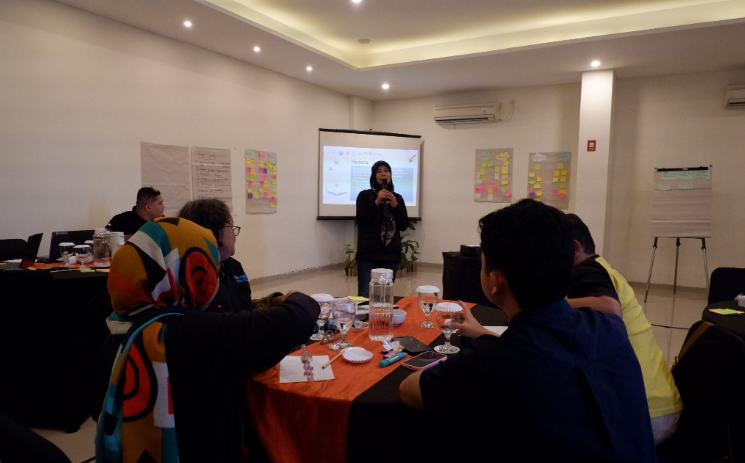
The second day focused on applying Human Centered Design through the Design Thinking process. Following a review of the previous day's learning, participants worked directly on real challenges faced by their own organizations.
The sessions began with the Empathy and Define stages, during which participants developed user personas to better understand the experiences, needs, and challenges of their target groups. This exercise demonstrated that successful innovation depends on understanding people's actual needs rather than organizational assumptions.
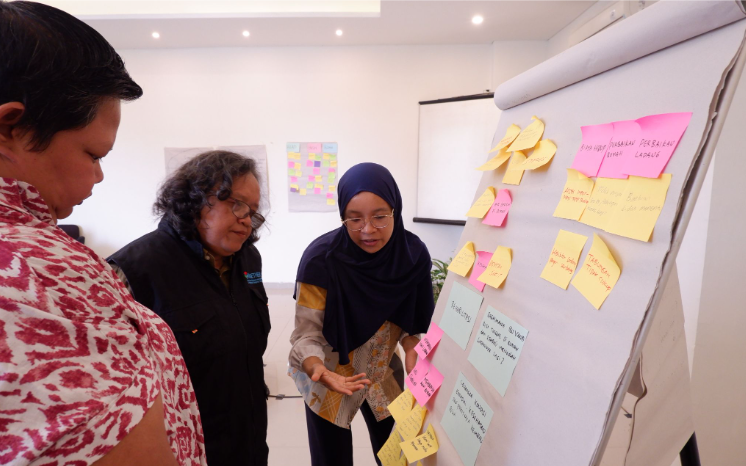
Participants then moved to the Ideate stage, brainstorming a wide range of possible solutions. Ideas were assessed according to user relevance, potential impact, and feasibility within each organization.
Before developing prototypes, facilitators led a discussion on ethics in humanitarian innovation. Participants explored principles such as do no harm, inclusion, protection of vulnerable groups, socio cultural sensitivity, and sustainability as integral components of every innovation process.
During the Prototype stage, each group transformed its ideas into initial models that could be visualized and tested. The prototypes were then presented during the Test session, where participants received constructive feedback from facilitators and peers. Through this iterative process, participants experienced innovation as a cycle of continuous learning, refinement, and improvement.
Building the Foundation for a Humanitarian Innovation Ecosystem
The training significantly strengthened participants' understanding of Human Centered Design while enhancing their capacity to develop solutions grounded in community needs. Evaluation results indicated that interactive learning methods, practical exercises, group discussions, simulations, and reflective sessions made the content both accessible and directly relevant to participants' organizational contexts.
Beyond strengthening individual competencies, the Innovation Training also reinforced collaboration among Peer Humanitarian Partners. Cross organizational interaction created opportunities to exchange experiences, share good practices, and build stronger partnerships for addressing humanitarian challenges across different regions.
Through this initiative, Yayasan SHEEP Indonesia not only enhanced participants' knowledge of Human Centered Design but also promoted a culture of innovation that places communities at the centre of humanitarian action. The mentoring process that will continue after the training is expected to support each organization in refining and implementing its prototypes, contributing to humanitarian responses that are more effective, adaptive, inclusive, and sustainable.