Select your language
 ID
ID 


Program Activities
Why Are NGOs Becoming Targets? YSI Encourages Civil Society Organizations to Rethink Strategies for Building Public Legitimacy
YSI
Hits: 87
3 minutes read
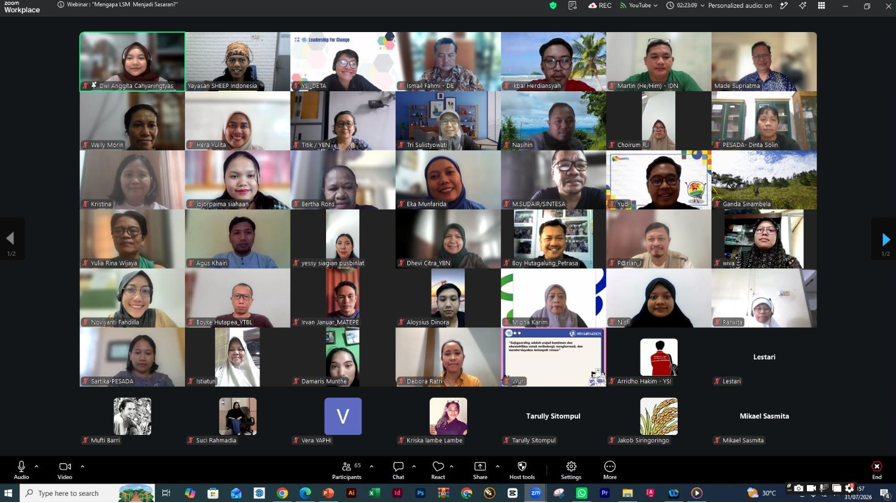
Yayasan SHEEP Indonesia (YSI) held a public discussion entitled “Why Are NGOs Becoming Targets?” to examine the logic behind narratives such as “londo ireng” and “foreign-backed NGOs” and their implications for Civil Society Organizations (CSOs) in Indonesia. The discussion featured Made Supriatma, Visiting Fellow at the ISEAS – Yusof Ishak Institute Singapore, and Ismail Fahmi, Founder of Drone Emprit, with moderation by Dwi Anggita Cahyaningtyas from Yayasan SATUNAMA Yogyakarta.
The discussion was grounded in the reality that civil society organizations play an important role in strengthening democracy, promoting community empowerment, defending human rights, protecting the environment, and supporting better governance. In recent years, however, civic space in Indonesia has faced new challenges as narratives such as “foreign-backed NGOs” and “londo ireng” have increasingly circulated in public discourse and social media.
Made Supriatma explained that Indonesian CSOs are currently facing a paradox. Their technical capacity has improved, but their political capacity and community organizing capacity have tended to weaken. CSOs have become stronger in producing data, conducting litigation, and building international networks, yet remain relatively fragile in cadre development, mass mobilization, domestic fundraising, and organizational security. He emphasized the importance of reorienting CSOs toward citizen organizing and people’s everyday lived experiences, rather than focusing solely on policy change.
“The real foundation of civil society organizations is organizing and mobilization. Issues must continuously be connected to citizens’ everyday experiences,” said Made Supriatma.
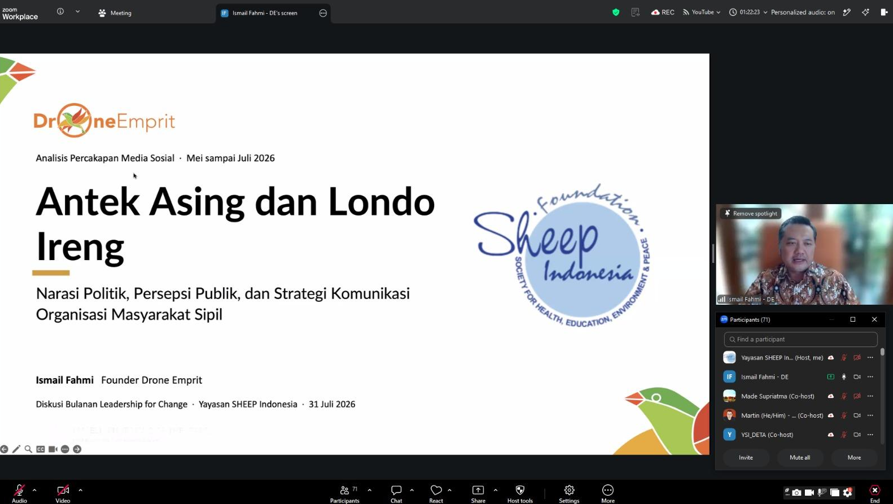
Meanwhile, Ismail Fahmi highlighted the public communication dimension of attacks against CSOs. According to him, narratives such as “foreign stooges” and “londo ireng” gain traction because they resonate simultaneously with historical memory, questions of funding, and nationalism. As a result, CSOs are not only facing criticism, but also bearing increasingly high communication costs to maintain public legitimacy.
He stressed that the main challenge for CSOs is not merely speaking to audiences that are already critical, but reaching the broader public that has not yet become polarized. In this context, platforms such as Instagram, TikTok, and Threads have become strategic spaces for building alternative narratives.
Ismail Fahmi proposed four strategies for strengthening the public legitimacy of CSOs. First, shift the debate from organizational identity toward concrete benefits for society. Second, rebuild a more balanced understanding of history. Third, strengthen narrative coalitions with journalists, academics, and citizens. Fourth, make use of social media algorithmic opportunities so that public messages can reach wider audiences.
“Move beyond a defensive posture. The public connects more easily with stories about tangible benefits than with administrative explanations about organizations,” Ismail Fahmi emphasized.
The discussion also underscored that the challenges facing CSOs should not be understood simply as a matter of having a “common enemy,” but rather as a threat to the public interest, particularly when spaces for citizen participation, public criticism, and community accompaniment are increasingly restricted. Participants highlighted the importance of rebuilding a common front among social movements, CSOs, academics, media, and citizens in order to create safe spaces and solidarity for activists and communities.
The discussion also underscored that the challenges facing CSOs should not be understood simply as a matter of having a “common enemy,” but rather as a threat to the public interest, particularly when spaces for citizen participation, public criticism, and community accompaniment are increasingly restricted. Participants highlighted the importance of rebuilding a common front among social movements, CSOs, academics, media, and citizens in order to create safe spaces and solidarity for activists and communities.