Select your language
 ID
ID 


Security and Workplace Protection Policy
Building an Accountable Organizational Culture Through the Implementation of Safeguarding Policies
YSI
Hits: 62
3 minutes read
YOGYAKARTA – Violence and harassment in the workplace, including within non-governmental organizations (NGOs), remain significant challenges that require a serious and systematic response. According to the International Labour Organization (ILO) Indonesia's 2022 data, 58% of NGO workers reported experiencing workplace violence, with psychological abuse and sexual harassment being the most prevalent forms. Alarmingly, most incidents involved supervisors, senior colleagues, or peers.
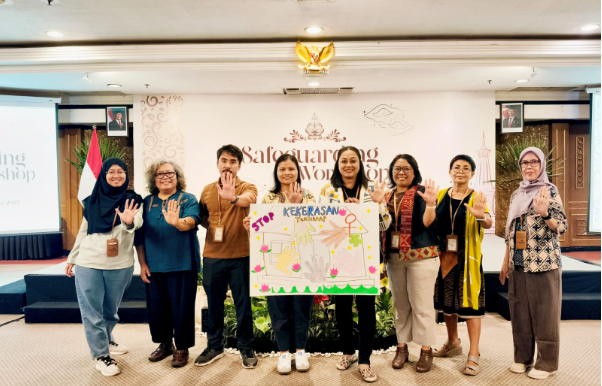
As part of its commitment to fostering a safe and accountable workplace, participation in the intensive "Safeguarding and Child Protection at Bread for the World (BfdW)" training was considered an important step toward strengthening the organization's safeguarding practices. The four-day training took place from 23 to 26 November 2025 in Yogyakarta. This participation marked an important milestone in aligning the organization's operational values with higher standards of public accountability. The training also strengthened participants' shared understanding of the importance of creating a safe, inclusive, and respectful workplace that is free from all forms of discrimination, abuse, and exploitation.
Why Safeguarding Is at the Core of an Organization
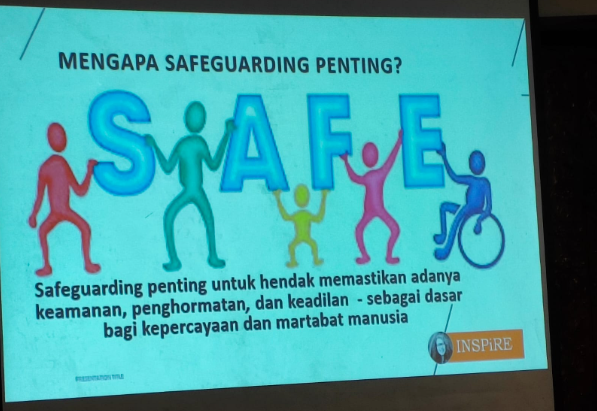
Safeguarding is more than a compliance requirement or a policy document. It is an active commitment to protecting people's well-being, dignity, and right to safety through a victim-centered approach. Humanitarian organizations and NGOs often work directly with children and other vulnerable groups. A robust safeguarding system helps address the root causes of abuse, which are often driven by unequal power dynamics, weak institutional procedures, and the normalization of harmful social and cultural practices.
In practice, safeguarding policies extend beyond internal personnel. They also apply to implementing partners, third-party service providers, logistics vendors, consultants, volunteers, and all individuals engaged in organizational activities.
Bridging National Legislation and Institutional Policies
The training featured Dr. Sri Wiyanti Eddyono, a legal expert from the Center for Law, Gender, and Society at the Faculty of Law, Universitas Gadjah Mada (UGM). She explored the relationship between safeguarding principles and Indonesia's legal framework, including the Law on Sexual Violence Crimes (UU TPKS) and the Minister of Manpower Decree No. 88 of 2023 concerning the Prevention and Handling of Sexual Violence in the Workplace.
One of the key messages emphasized during the training was the substantial social and psychological cost of responding to violence and abuse cases. Supporting survivors requires considerable time, resources, and multidisciplinary collaboration involving psychologists, legal professionals, social workers, and safe houses. For this reason, prevention through awareness raising, continuous education, and the establishment of a clear Code of Conduct is essential and cannot be compromised.
Action Plan: Building an Active Bystander Culture
The training also resulted in a practical roadmap and action plan to strengthen safeguarding implementation across the organization.
- Internal Safeguarding Refreshers. Conduct regular safeguarding training and learning-sharing sessions during staff meetings to ensure a common understanding and consistent application of safeguarding principles.
- Program-Level Dissemination. Ensure that safeguarding knowledge is communicated inclusively to beneficiaries, community members, partners, and project participants across all program areas.
- Developing and Strengthening the Code of Conduct. Prepare and reinforce a comprehensive Code of Conduct that clearly defines personal boundaries, prohibited behaviors, and safe, confidential, and trusted whistleblowing mechanisms.
By strengthening these systems, every member of the organization is encouraged to move beyond being a passive bystander when witnessing potential misconduct. By understanding appropriate boundaries, taking responsibility, and applying fair, objective, and impartial reporting and response procedures, organizations can cultivate a professional, respectful, and genuinely safe working environment for everyone.
Introduction
The Security and Workplace Protection Policy of YSI is developed and implemented to foster an organizational culture that is accountable, transparent, and consistently Creative, Innovative, and Caring in response to YSI’s external demands. This policy is enforced with the intention of anticipating a decline in organizational spirit and preventing any deviant practices.
This awareness and foundation are, of course, based on the implementation of the values and work principles upheld by YSI. The foundations of the Security and Workplace Protection Policy are as follows: :
- Every staff member and other individuals are entitled to safety and protection in carrying out their work and in interacting with others, so that they can perform optimally, wherever they are, as long as they are affiliated with SHEEP Indonesia.
- All available resources must be used in a safe, efficient, and effective manner.
To support the implementation of the Safety and Protection Policy, YSI requires honest and open cooperation from all stakeholders, both internal and external. Therefore, please share openly and honestly anything that YSI needs to know and improve, whether in the form of suggestions, feedback, questions, concerns, or appreciation.
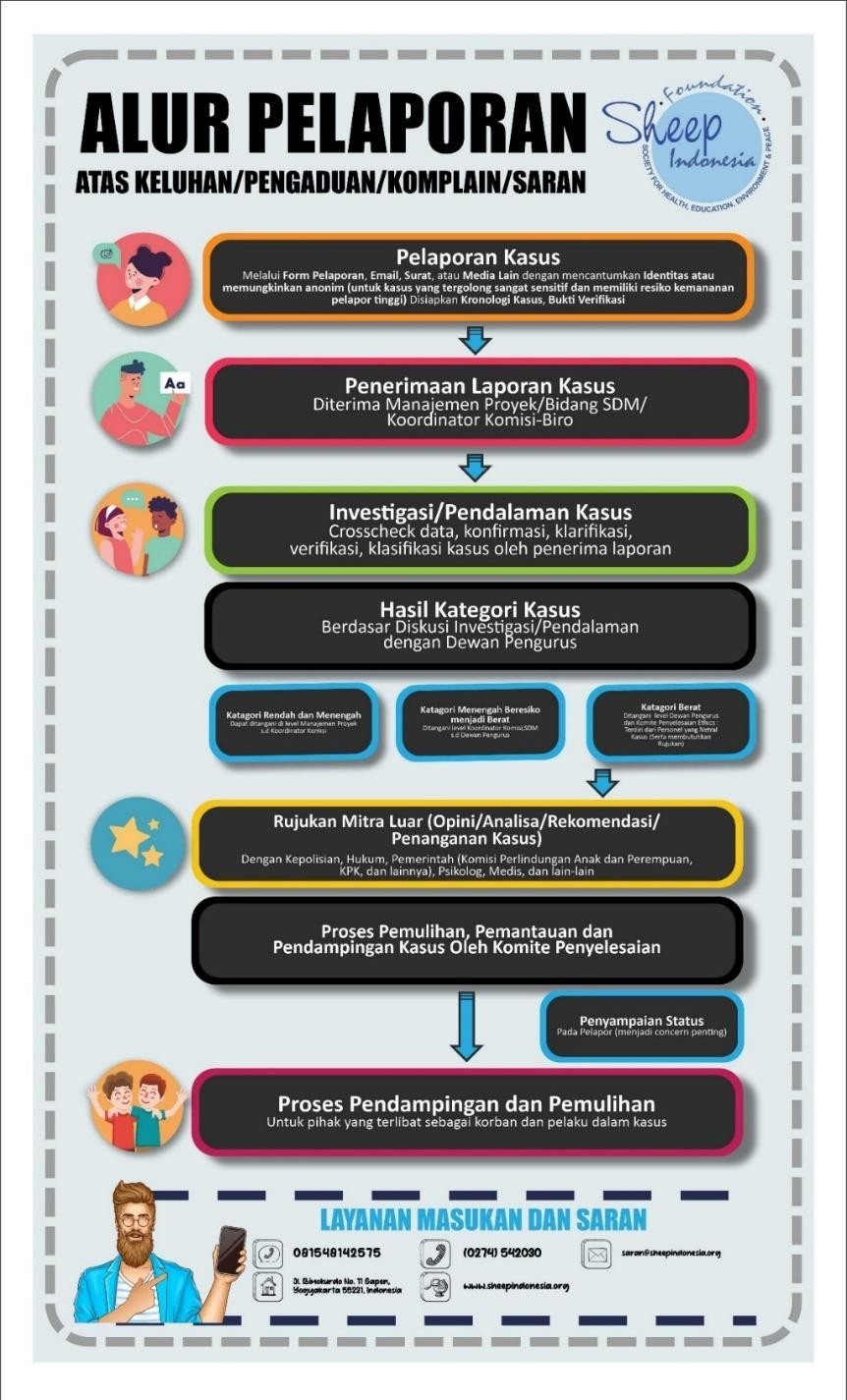
If your input is submitted as a complaint, report, or suggestion, please review the reporting flowchart beforehand.
Commitments
- Uphold and adhere to the values and working principles of YSI.
- Abide by and refer to the four core principles: humanity, impartiality, independence, and neutrality.
- Prioritize the call and dignity of humanity above all other interests.
- Implement programs and activities regardless of race, religion, or nationality of the recipients, and without favoritism. Assistance priorities are determined solely based on needs.
- Ensure that all activities are not used to serve any political or religious agenda.
- Commit not to act as an instrument of foreign policy, government, or any political interest group.
- Respect local cultures, customs, potential, and wisdom.
- Promote empowerment and advocacy based on local capacities in all programs carried out.
- Involve participants as subjects in the management of programs and activities through participatory approaches.
- When providing basic needs assistance during emergencies, strive to reduce future vulnerabilities.
- Be accountable to both those who receive assistance and those who provide resources.
- Information, publication, and campaign activities must treat participants as dignified human beings, not as mere objects of the activity.
- Respect and promote Human Rights without discrimination.
- Treat all communities with whom YSI works (including crisis-affected populations, Internally Displaced Persons, Survivors, and Refugees) fairly, respectfully, courteously, with dignity, and in accordance with International Laws and Standards.
- Promote the implementation of YSI’s ethical policies and regulations to contribute to the creation and maintenance of an environment that prevents sexual exploitation, abuse of power, and corruption.
- Immediately report any knowledge, concern, or strong suspicion of ethical violations to field management and/or YSI management with the authority to take prompt investigative action.
- Recognize that failure to disclose or intentional withholding of information regarding reports, concerns, or strong suspicions of violations of the Code of Ethics constitutes grounds for disciplinary action.
- Uphold the highest standards of accountability, efficiency, competence, integrity, and transparency in the procurement of goods and services during the execution of work.
- Cooperate when requested in investigations of alleged violations of the Code of Ethics.
All YSI Staff, Volunteers, Community Members, and Partners must understand and be aware that:
- Sexual Exploitation and Abuse
Sexual exploitation and abuse are forms of Gender-Based Violence (GBV). YSI recognizes that sexual exploitation and abuse can occur in the course of humanitarian aid delivery or management. These acts may take place during humanitarian crises, particularly in situations where affected populations are dependent on humanitarian agencies to meet their basic needs. Therefore, it is crucial to establish additional ethical responsibilities and obligations for all those involved.
- Harassment
- Conflict of Interest
In performing duties and responsibilities, individuals are prohibited from engaging in business activities or any form of work that benefits themselves, violates values and principles, or contradicts any rules and guidelines related to their roles and obligations to YSI. It is strictly forbidden to misuse one's position to carry out personal work or conduct buying and selling activities for personal gain or the benefit of others, whether such activities occur within or outside YSI premises.
- Abuse of Position
It is prohibited to use one's position or title on behalf of the organization for political interests, investments, purchases, or similar activities, as well as for acts of violence, sexual harassment, violence against women and children, or any other unethical behavior. Using one’s position to gain special treatment from others that could lead to a conflict of interest or ethical misconduct is also not allowed.
- Confidentiality
Maintain the confidentiality of information related to YSI and ensure transparency in accordance with its scope and purpose. It is forbidden to use YSI's information for personal benefit. Furthermore, such information must not be disclosed, either directly or indirectly, to any individual or other organizations, unless necessary for assessing YSI's performance or enhancing its public image.
- Fraud and Corruption
YSI adopts a zero-tolerance approach to fraud and corruption. Staff, volunteers, and partners must never take advantage of their positions while working with communities.
- Child Protection
YSI may involve children directly or have staff, partners, and volunteers who engage with children during program implementation. These activities can increase the risk of abuse, exploitation, or neglect of children in the programs. Therefore, it is essential to respect all children as individuals regardless of their background, gender, or sexual orientation, and to provide and maintain a safe, nurturing, and supportive environment for them.
- Prevention of Gender-Based Violence
Gender-based violence is considered a serious violation by YSI. The level of the case will be determined based on the results of an investigation.
- Conflict of Interest